
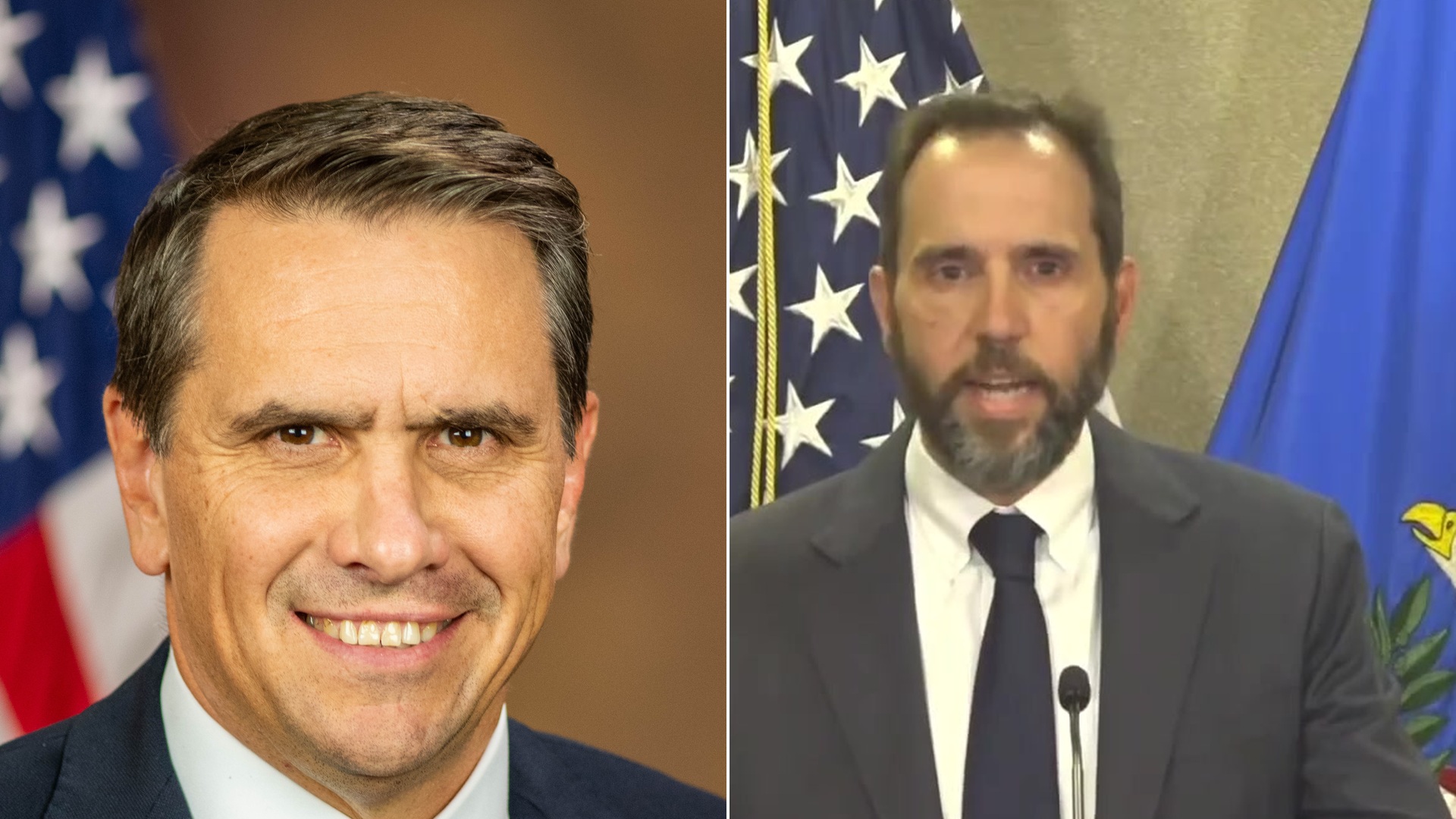
Todd Blanche takes the podium with a folder thick enough to qualify as cardio. Somewhere in the audience, Jack Smith sits with the posture of a man who already knows the speech is about him and has decided blinking is optional.
Blanche begins with process. He talks about timelines, memos, and the temptation to treat every disagreement like a final scene. He says Smith’s old team moved through rooms as if volume equaled proof. A few people clap. A few people check their phones for the glossary.
Smith does not clap. He writes something down. From a distance it could be a rebuttal. It could also be a grocery list. The ambiguity feels intentional.
Blanche sharpens the critique. He says witness interviews should not feel like obstacle courses. He says warrant affidavits should read like documents, not trailers. He says planting a narrative is easier than planting evidence, and both habits belong in the trash. The line lands hard enough that even the room’s coughers pause.
A reporter asks whether Blanche is announcing a policy shift or simply enjoying a microphone. Blanche says good speechwriting can be both. The reporter looks annoyed at the honesty.
Smith is invited to respond later in a brief corridor exchange that has the energy of two men comparing calendars. He says teams are made of people, people make choices, and choices can be defended in writing. Blanche says he looks forward to the writing. They nod the way lawyers nod when the real argument is scheduled for later.
Behind the scenes, aides from both sides trade printouts. One page is Blanche’s speech. One page is Smith’s annotated copy, covered in neat arrows. A junior staffer whispers that the arrows look personally offended.
By the end of the afternoon, cable panels have clipped the fiery parts and ignored the procedural middle, which is how cable panels show love. Blanche returns to his office and loosens his tie. Smith returns to his and tightens his. Neither looks finished.
What remains is a public record of a fight about methods, told without a courtroom and without a verdict. Blanche wanted a warning shot. Smith treated it like a memo with better lighting. The rest of Washington does what it always does: picks a favorite sentence and repeats it until dinner.
A former colleague of Smith’s tells reporters that fiery speeches are easy and case files are hard. Blanche’s aides counter that case files get uglier when tactics go unchallenged. Both quotes are accurate enough to survive the evening shows.
In the hallway, a student intern asks Smith whether he is angry. He says anger is a luxury schedule that he did not bring. The intern writes that down, then wonders whether it was meant to be memorable.
Blanche ends his day with a private briefing that is calmer than the podium version. He wants reviews, not theater, he tells his staff. His staff, who just watched theater, take notes anyway.
Outside, a vendor sells coffee to both camps without choosing a side. In Washington, that may be the only successful bipartisan business of the day. Blanche tips. Smith tips. The rivalry continues on caffeine alone.
A senator in the second row tells a colleague that speeches like this are how reputations get sandpapered in public. The colleague says sandpaper is kinder than silence. Neither stays for the corridor coda.
Blanche files the transcript under unfinished business. Smith files his notes under same. For once, the labels match.