
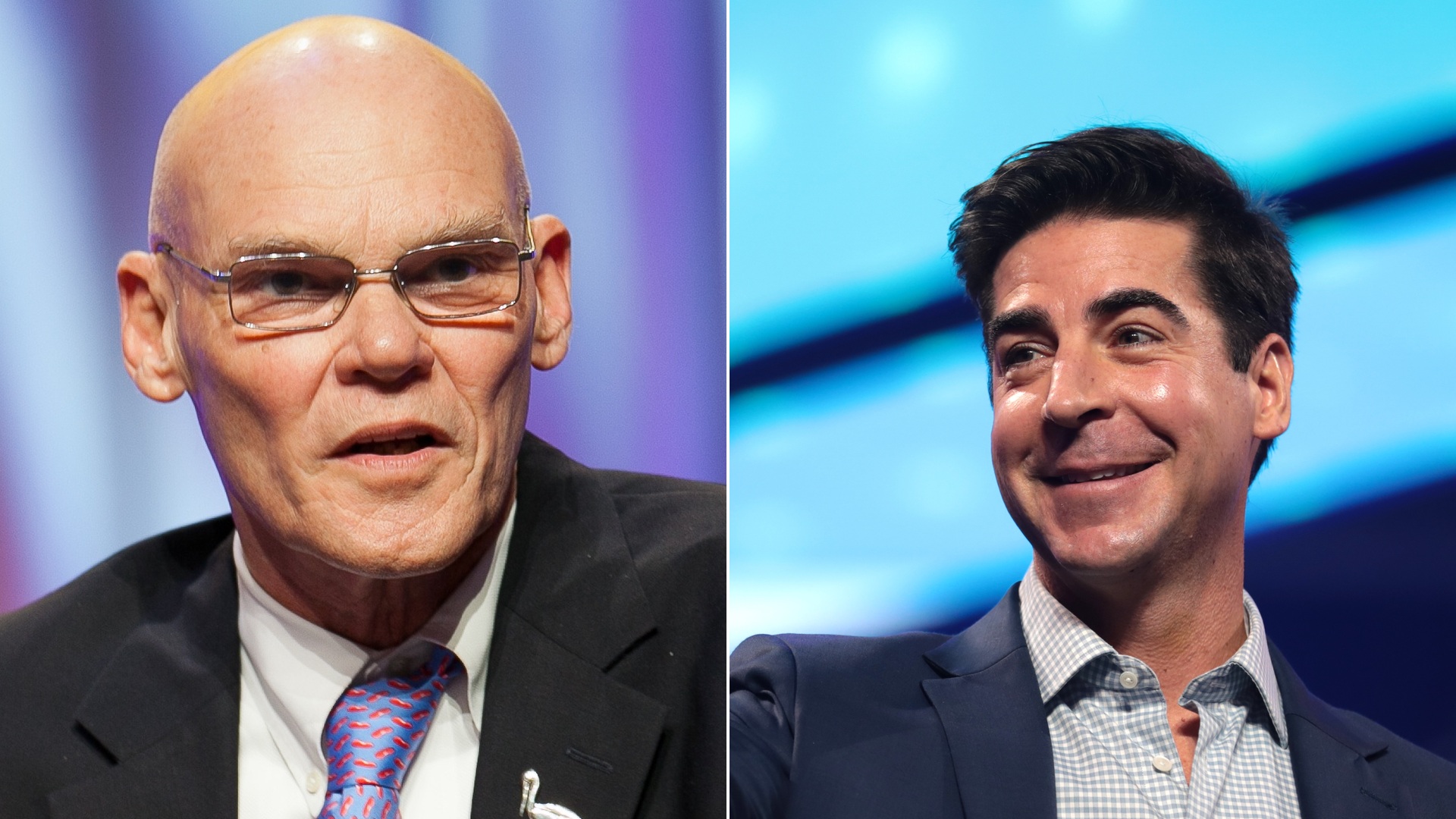
James Carville dials into Jesse Watters’ show with the energy of a man who has been waiting all day to argue with furniture. He wants a fight. He wants a stage. He wants the kind of long answer that leaves no oxygen for anyone else.
Watters lets him get about forty-five seconds in. That is long enough for Carville to warm up the engine and short enough for Watters to decide the destination is not worth the trip. Carville starts explaining what the country needs. Watters starts smiling the smile of a host who has already written the final line.
“No one gives you a stage any more because you’re an angry old man who runs on hate,” Watters says. The control room freezes for half a beat, then remembers this is television and that half a beat is gold. Carville makes a sound that is not yet a sentence.
Watters continues, almost gently by his standards. “A debate isn’t going to help you, James. Therapy will.” Then he hangs up. No commercial teaser. No promise of part two. Just a dial tone where a monologue expected to live.
Carville, according to people who heard the aftermath, stares at his phone like it personally betrayed him. He calls back once. He does not get through. He calls a producer and receives the kind of politeness that means absolute no. On social media, the clip sprouts captions faster than Carville can draft a rebuttal.
Watters moves on to the next segment as if he has hung up on a telemarketer. He later says Carville was looking for a fight and found a referral. The audience laughs. The crew laughs. Somewhere, a therapist who did not ask to be involved becomes trending for twenty minutes.
Carville frames the exchange as proof that cable hosts cannot handle a real debate. Watters frames it as proof that some debates are just volume with a country accent. Their supporters quote whichever half of the clip flatters them and ignore the rest, which is the national sport.
By the next morning, the phrase therapy will is on shirts that should not exist yet. Carville says he is fine and always has been. Watters says the invitation remains open if Carville brings a quieter hobby. Neither man apologizes. Neither man needed to. The call already ended on the only line anyone will remember.
After the call, Watters’ producers replay the hang-up three times to check levels. Each replay gets funnier and meaner in equal measure. Someone suggests a standing segment called Therapy Corner. Watters says once is a punchline and twice is a brand, and brands need lawyers.
Carville appears on another outlet within the hour, insisting he was muted by fear. The host tries to look solemn and fails whenever the original clip plays under the conversation. Even Carville almost laughs once, then recovers into outrage.
At a bar near the studio, strangers reenact the call with fries as microphones. The Watters character always wins because the hang-up is built into the game. The Carville character demands a rematch and is denied on principle.
By midnight, Watters has moved on to other guests. Carville has moved on to longer voicemails. The country’s group chat, as usual, keeps both men alive as stickers.
A media coach on a podcast calls the hang-up a master class in endings. Another coach calls it emotional vandalism. Downloads of both episodes rise. Watters texts a producer a single clap emoji. Carville texts several paragraphs to people who already agree with him.
In offices the next day, people imitate the call at the coffee machine. The Watters impression always gets the last word because that is how the recording ends. The Carville impression demands one more sentence and never receives it.