
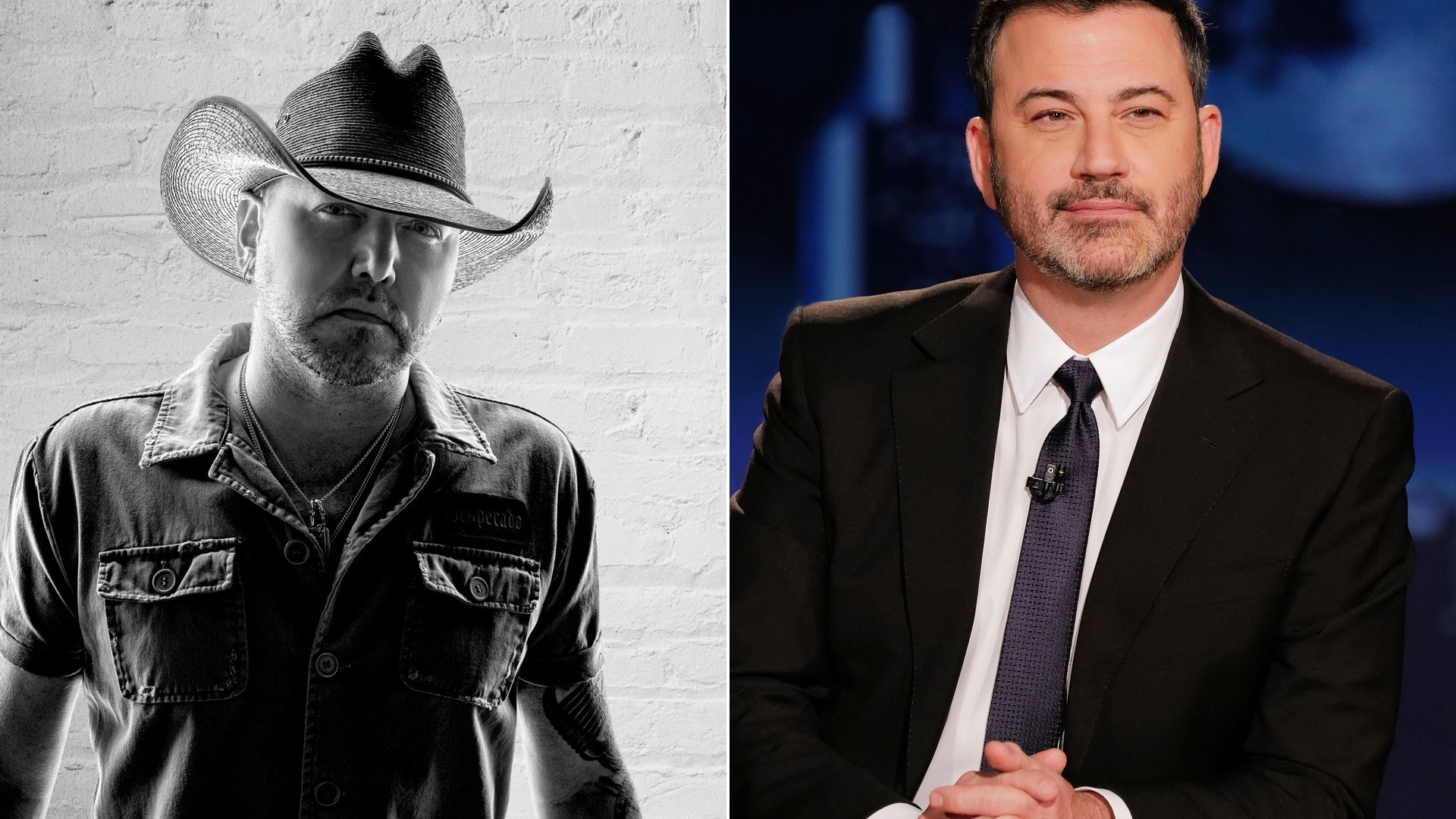
Jason Aldean had been on the Jimmy Kimmel stage for only a few minutes when the visit ended the hard way. The country singer and his entire entourage walked off, leaving a late-night set that had been billed as a music stop looking like a room someone had abandoned in a hurry.
The appearance, according to people around Aldean, was supposed to be strictly non-political. He was there to play, maybe talk about the road, and get out without a lecture. Kimmel, they say, could not resist a jab at the singer’s politics, and the joke landed in a place the guest had been told was off limits.
Aldean’s manager did not bother with a soft translation. “This appearance was meant to be a music show, but Kimmel broke the rules,” the manager said. In that telling, the walk-off was not a tantrum. It was the enforcement of a deal the host treated as optional.
The exit was not a solo. Band members, assistants, and the rest of the traveling party followed Aldean off the stage and down the hallway, past the usual clutter of cables and coffee cups, while the studio audience sat with a punchline and no guest. Minutes in is a short clock. It was long enough to blow up the segment.
Kimmel’s side has a different memory of the night, or at least a different priority. His public relations department later issued a press release that went after Aldean for embarrassing the host and for opening a hole in the schedule, as if the worst part of the evening were the clock.
That statement did not bring anyone back to the stool. Late-night shows run on timing, and a vanished musical guest is a problem a producer can feel in the chest. It is also a problem that looks, to Aldean’s camp, like a mess of the host’s own making.
People who book these appearances spend days negotiating the small print: song choice, chat topics, what is friendly banter and what is a trap. Aldean’s team says those conversations happened and that everyone agreed politics would stay off the floor. Then the monologue energy leaked into the guest chair.
Kimmel has built a career on needling public figures, and his audience expects it. That is precisely why Aldean’s people say they asked for a music night. A political roasting, in their view, was available any other evening, on any other guest, without using a country act as the prop.
By the time the press release went out, the walk-off was already the story, and the song that did not get played had become a footnote. Clips of an emptying stage travel faster than a carefully worded complaint about booking terms. Both sides knew that. Only one of them left.
Aldean’s response, when it came, was not a policy paper. “Tell Jimmy Kimmel to kiss my A**,” he said. “He can kiss my A**.” That settled the question of whether he felt like apologizing for the hole in the schedule. He did not.
The show went on, as these shows do, with a gap where a performance was supposed to be. Aldean went on as well, minus one late-night credit and plus a feud that will be retold every time someone books a musician and promises, this time, that it is only about the music.
For a night that was meant to be simple, it ended with a manager talking about broken rules, a public relations office talking about embarrassment, and a singer talking about what Kimmel could kiss. That is a full argument. It just was not the one advertised at the start of the hour.