
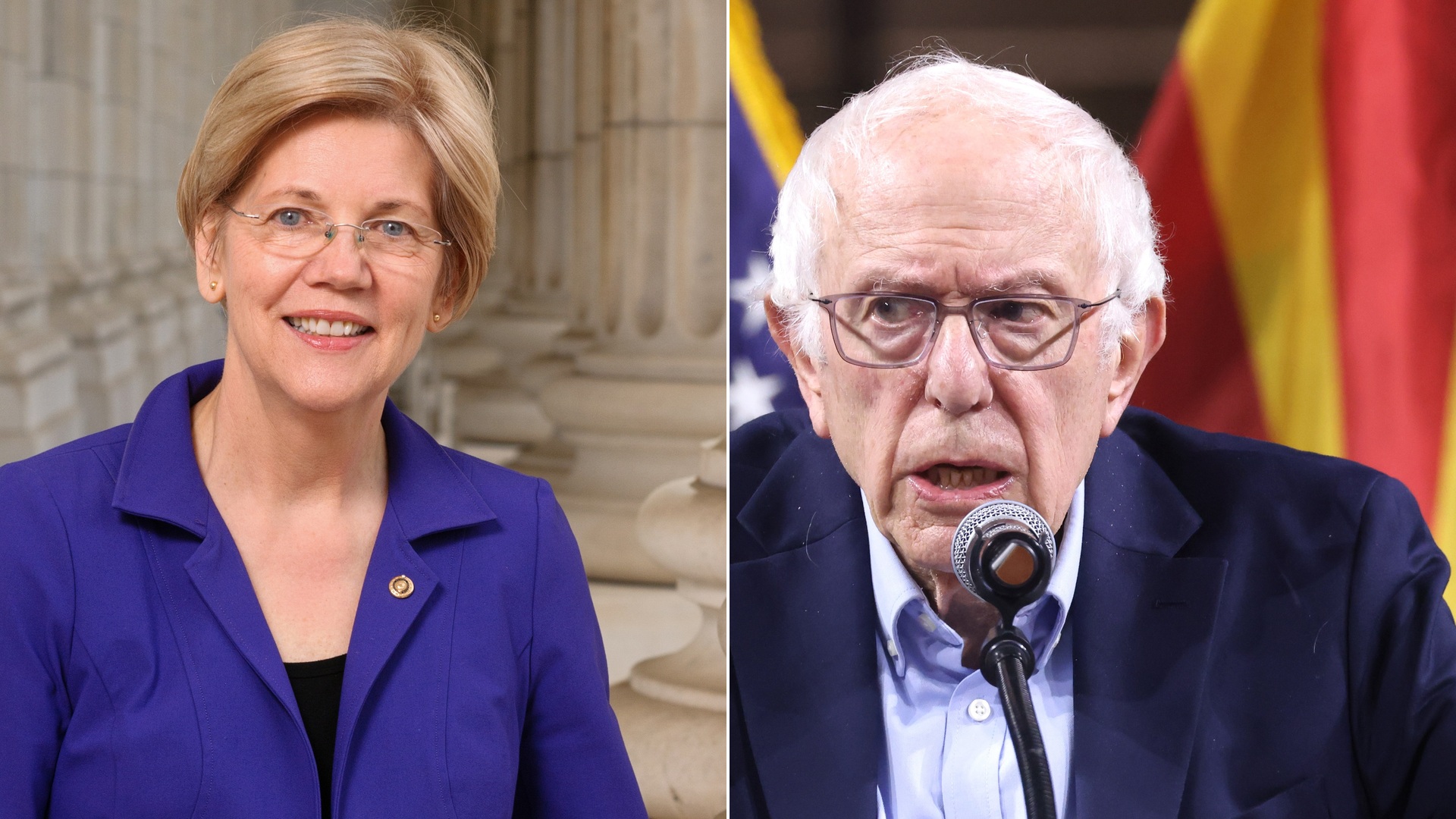
Elizabeth Warren and Bernie Sanders sit at a long table facing a stack of fundraising letters so tall it has developed weather. Volunteers swear the pile grew overnight. The letters all carry warm personal notes. The signatures all look suspiciously identical.
A moderator asks the obvious question: who signed these? Warren says the operation uses an autopen for volume. Sanders says volume is not an excuse for sounding like a greeting card written by a committee. The moderator writes both answers down as if they were different.
They begin reviewing samples. One letter thanks a donor for courage. Another thanks a donor for grit. A third thanks a donor for grit and courage, which feels like the machine got bored and combined templates. Warren reads one aloud and admits the phrasing could use less enthusiasm per square inch.
Sanders holds up a page and squints. He says his signature looks taller than usual. Warren says that is because the autopen had a confident morning. A staffer explains the machine settings in the tone of a person describing a sacred appliance. Nobody feels wiser.
The room turns into a workshop. They try rewriting a paragraph by hand. Warren’s version is precise. Sanders’s version is shorter and somehow louder. A young aide suggests combining them. The result reads like a motivational poster arguing with a budget memo.
Someone asks whether donors can tell. Another aide says donors mostly notice whether the letter arrives before the next letter. That gets a laugh, then a silence, then a plan to slow the mailings by one day so the pile can emotionally recover.
Warren proposes a rule: no letter should claim a personal memory unless a human being actually remembers it. Sanders proposes a second rule: no letter should use the word fight more than twice. They argue about whether fight is a verb of passion or a cry for help. The autopen, unplugged for the demonstration, remains neutral.
By the end of the session, they have a revised template, a shorter thank-you, and a sticky note that says stop stacking letters into geological formations. Warren initials the sticky note by hand. Sanders does too. The contrast with the machine signatures is so obvious that a volunteer takes a photo for training purposes.
They leave with the pile smaller and the jokes larger. Outside, a donor waiting for a selfie asks if the letters are real. Warren says the gratitude is real. Sanders says the paper is real. The donor says that is enough and asks them to smile like the autopen.
A retired teacher in the audience asks whether students would get flagged for identical signatures on homework. Warren laughs and says that is the point of the review. Sanders says school taught him to show his work, and fundraising should too.
They test a new closing line on three volunteers. Two like it. One says it still sounds like a machine that attended a workshop on warmth. They cut three adjectives and try again. This time all three volunteers nod.
A courier arrives with yet another box. The room groans in harmony. Warren redirects the box to a labeled tray before it can join any future mountain. Sanders tapes the tray shut with the satisfaction of a man defeating geography.
On the way out, they pass a printer still humming. Warren switches it off. Sanders unplugs the autopen for the night. The silence feels like progress. Tomorrow the machine can return, they agree, but only after the humans have chosen the words.