
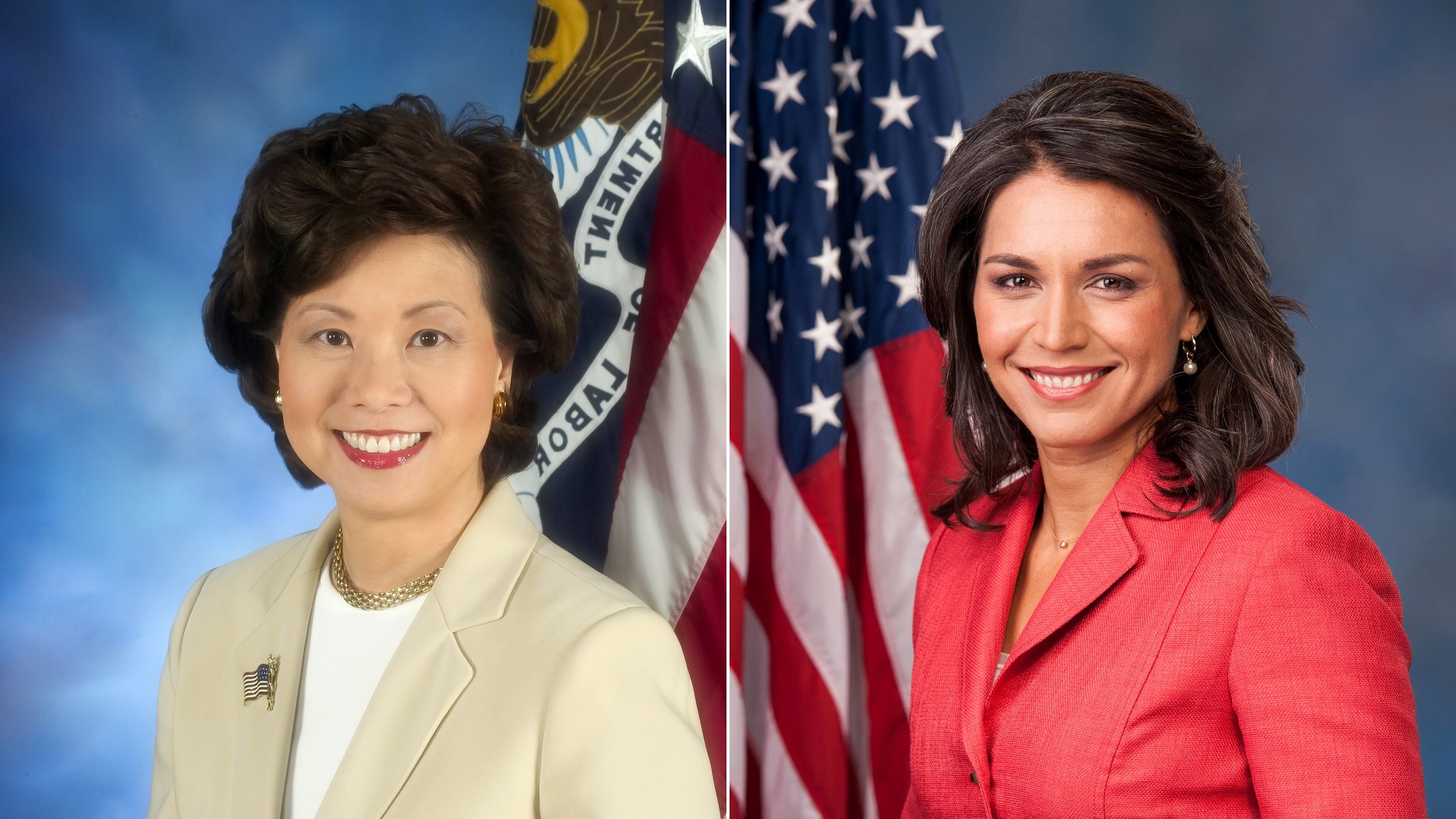
Elaine Chao books a perfectly ordinary trip to China, Mitch McConnell stays home with a stack of unread mail, and Tulsi Gabbard somehow turns the whole thing into the week’s loudest political bit.
Nobody is accused of anything. Nobody is investigated. The only thing spinning is the rumor mill, and it is spinning for fun.
Chao’s itinerary, is the kind of thing aides print in 12-point font and staple into a binder. Meetings. Handshakes. A polite dinner. A flight home. McConnell, decides the couch looks better than another airport lounge and waves her off from the driveway.
That is when Gabbard, decides the schedule looks “interesting.”
Interesting, of course, is Washington code for “I can get three cable hits out of this.”
Within hours of Chao’s departure, Gabbard is imagined holding court in a hallway, raising an eyebrow at anyone who will listen. She does not claim to have a dossier. She does not claim Chao is anything but a traveler. She simply wonders, aloud and often, why the trip had to happen this week.
“If they call, they come,” she says al scene, meaning the cable bookers, not a foreign government. “There is no choice.”
Staffers invent a few theories of their own. One says Chao is chasing a dumpling recommendation. Another says she is finally returning a library book from 1998. A third insists McConnell just wanted the remote for once.
The joke writes itself, which is lucky, because nobody is writing a subpoena.
By afternoon, the chatter has a life of its own. Aides trade mock briefings. A junior staffer draws a flowchart titled “Possible Reasons Elaine Left Town” that includes “weather,” “loyalty points,” and “Mitch needed a nap.”
McConnell, still home , is imagined answering the door for a delivery and asking whether the country survived lunch without him. He is fine. He is not in a hospital. He is just a man who chose slippers over a boarding pass.
Chao, overseas in the fiction, sends a postcard that somehow arrives the same day. It says the meetings went well and the tea was hot. Gabbard reads it on camera and calls it “suspicious in its politeness.”
That is the whole scandal. Politeness.
Late in the day, both sides of the invented aisle agree on one thing: the trip was boring, the speculation was not, and everyone involved somehow got more screen time than the actual agenda.
Chao lands, McConnell waves from the porch, and Gabbard promises next week’s theory will be even better. In a city that runs on noise, a quiet China trip turns out to be perfect comedy fuel.
Nobody’s career ends. Nobody’s file opens. The only thing sealed is the joke, and even that will be reopened the next time someone books a flight.
Aides later stage a town hall where the only slide is a photo of Chao’s boarding pass with the sensitive details blacked out for comedy, not secrecy. Someone asks whether McConnell missed her. He says he missed the quiet. Someone asks whether Gabbard will apologize. She says she will apologize when cable news invents a quieter hour.
Tourists outside the Capitol repeat the joke without knowing half the names. That is how Washington comedy travels: badly summarized and somehow still funny. Chao returns with gifts that are just tea and a keychain. Gabbard calls the keychain symbolic. McConnell calls it a keychain.
In the end, the agencies do not maintain dossiers. They maintain snack drawers. The trip seals nothing except a punch line, and Chao’s career continues exactly as it should in a story that refuses to invent villains out of boarding passes.