
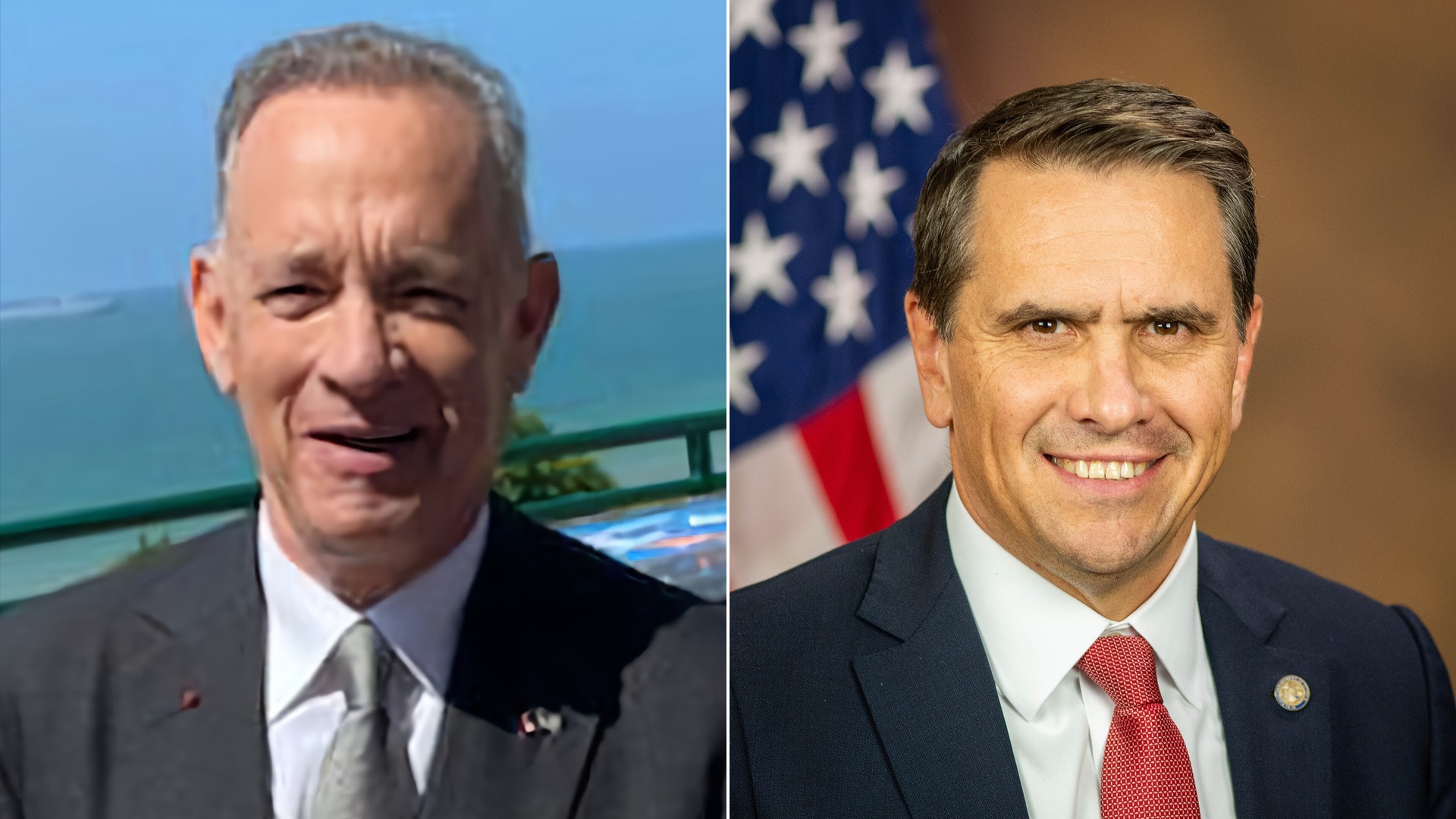
Todd Blanche becomes convinced that Tom Hanks has slipped into New York for a star-studded weekend, and the only evidence he has is a coffee receipt, a wrong gate announcement, and a vivid imagination.
There is no investigation. There are no customs violations. There is just Blanche narrating a travel farce as if it were a courtroom thriller.
Blanche telling a room full of aides that Hanks was “definitely” spotted near a Midtown hotel. Someone asks for a photo. Blanche produces a blurry picture of a man in a baseball cap who may or may not be a statue.
“Rich celebrities think the rules are suggestions,” Blanche says in this made-up scene. He means the rules of boarding groups, not the law. Hanks, is simply trying to find Terminal B.
A subplot invents Paul McCartney in the next security line, humming and holding a pretzel. The two legends wave. A TSA officer asks Hanks whether he packed liquids correctly. Hanks says he packed hope and a paperback.
Blanche decides this is a pattern. He drafts a timeline: Hanks lands, Hanks tips a driver too much, Hanks walks into a bakery, Hanks leaves with a cookie the size of a steering wheel. Somewhere in Blanche’s telling, Taylor Swift’s wedding is rumored to be happening across town, but nobody confirms it, attends it, or proves it exists that weekend. It is just the kind of celebrity noise New York invents before breakfast.
Hanks, for his part, is imagined asking a concierge where ordinary people buy subway cards. The concierge offers a private car. Hanks takes the subway anyway and helps a tourist read a map.
By evening, Blanche’s comedy brief has grown to twelve pages. It includes diagrams of airport exits and a sticky note that says “ask about the cookie.” Aides gently suggest the brief is a screenplay. Blanche says every screenplay needs an antagonist, then points at a broken ticket kiosk.
The kiosk wins.
In the final fictional beat, Hanks flies home with a souvenir magnet and a story about a very earnest lawyer who thought a bakery line was a conspiracy. Blanche files the magnet under “Exhibit A” and promises a sequel if anyone famous buys coffee again.
No one is questioned by investigators. No one skips customs. The only thing Hanks breaks is the city’s record for polite map-helping, and even that award is imaginary.
Hotel staff begin referring to Blanche as the man with the timeline. They offer him a muffin and a map of places Hanks has never been. He highlights all of them.
A morning-show segment asks whether celebrities should announce their bakery visits. Hanks, watching from a gym treadmill in the story, says people should announce when the elevator is broken. Blanche takes notes anyway.
By the time the weekend ends , the city has gained a legend about a movie star who paid for a stranger’s metro card and a lawyer who mistook kindness for a case file. The souvenir magnet ends up on Blanche’s fridge next to a takeout menu. He labels it evidence. His family labels it Tuesday.
Security footage shows only a man holding doors open for strangers. Blanche circles the frame anyway. An aide suggests a hobby. Blanche says the hobby is vigilance about boarding groups.
Hanks sends a thank-you note to the bakery that is really just a smiley face. Blanche enters it into the imaginary archive under handwriting analysis and then admits he cannot read smiley faces. The weekend closes with both men getting what they wanted: Hanks got cookies, Blanche got a story, and New York got another legend that harms no one.