
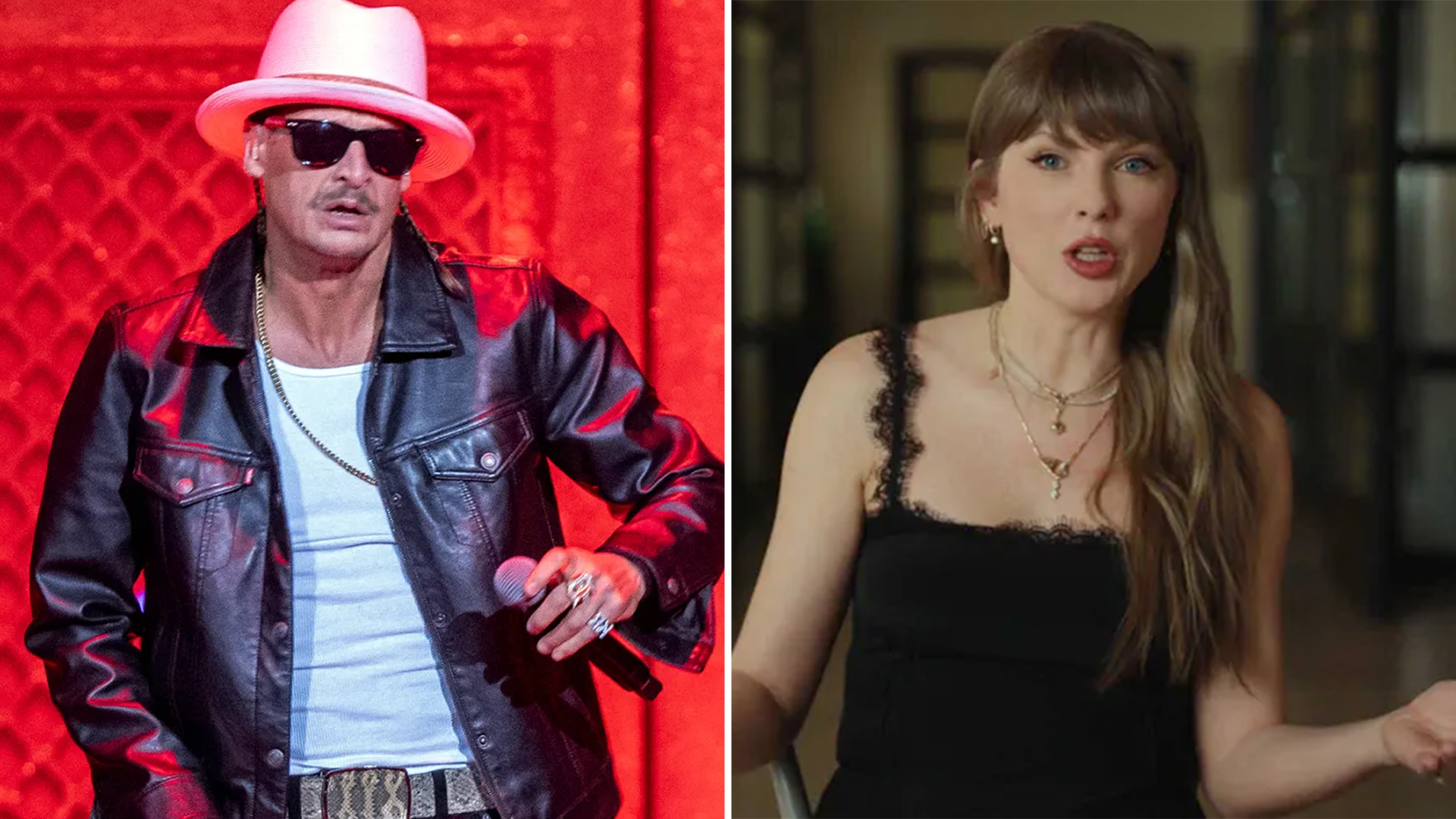
Kid Rock has never been far from controversy, but in 2026 the outspoken rocker found himself at the center of one of the biggest touring stories in modern country music. His traveling festival, “Rock The Country,” branded by supporters as the ultimate anti-woke concert experience, has exploded in popularity across small-town America. Social media posts, fan videos, and conservative commentators have claimed the tour is “breaking ticket sales records” once associated with Taylor Swift, sparking heated debate online about politics, music, and the future of live entertainment.
Whether those comparisons are entirely accurate or not, one thing is undeniable: Kid Rock has tapped into a cultural movement that stretches far beyond music.
The “Rock The Country” tour was originally designed as a traveling festival celebrating country music, southern rock, patriotism, and what Kid Rock frequently calls “real American values.” Instead of focusing on major coastal cities, the tour targeted smaller markets and rural communities often overlooked by major touring acts. Stops in states like Texas, Georgia, Michigan, and South Dakota quickly turned into massive weekend events filled with concerts, camping, tailgating, and merchandise sales.
The lineup itself became a major selling point. Depending on the city, fans could see artists such as Jason Aldean, Miranda Lambert, Lynyrd Skynyrd, Brooks & Dunn, Creed, and Jelly Roll sharing the stage with Kid Rock. The mix of classic southern rock and modern country created a broad audience appeal that attracted both older fans and younger listeners.
But the real fuel behind the tour’s popularity was not just music. It was identity.
Kid Rock openly promoted the festival as an answer to what he described as “woke culture” taking over entertainment. At concerts and in interviews, he criticized Hollywood elites, corporate activism, cancel culture, and political correctness. Those comments resonated strongly with a large section of the country music audience that feels ignored or mocked by mainstream media.
Fans embraced the branding enthusiastically. Social media clips from the shows showed packed crowds waving American flags, chanting patriotic slogans, and celebrating what many attendees described as a “freedom-first” atmosphere. For supporters, the tour represented more than a concert. It became a cultural statement.
That cultural energy translated into serious business.
Reports from ticketing platforms and local venues suggested that several dates sold out rapidly, forcing organizers to add additional seating and VIP packages. In smaller markets that rarely host major music festivals, hotels reportedly filled weeks in advance. Merchandise sales also surged, with “anti-woke” themed shirts and patriotic apparel becoming some of the highest-selling items of the tour.
The comparisons to Taylor Swift began appearing online after several commentators claimed certain Rock The Country dates were outperforming local attendance numbers associated with Swift’s previous stadium appearances in nearby regions. Some conservative influencers even described Kid Rock as “the people’s alternative to pop culture elitism.”
However, the comparison itself requires context.
Taylor Swift’s Eras Tour remains one of the highest-grossing tours in music history globally, generating billions in revenue and dominating international stadium markets. Comparing a multi-city festival tour concentrated in rural America to Swift’s worldwide stadium phenomenon can be misleading. Swift’s audience size, global reach, and ticket demand remain historically massive.
Still, Kid Rock supporters argue the story is less about absolute numbers and more about cultural momentum. In their view, the fact that an openly anti-establishment, politically charged country-rock festival can compete so aggressively in ticket demand demonstrates a major shift in entertainment culture.
That shift has become impossible to ignore.
Over the past few years, country music has increasingly become intertwined with America’s political divide. Artists like Jason Aldean and Oliver Anthony have sparked national conversations about patriotism, working-class frustrations, and cultural identity. Kid Rock has leaned into that trend more aggressively than almost anyone else in entertainment.
Critics say the strategy is intentionally divisive.
Opponents accuse the tour of exploiting political polarization for profit. Some activists criticized the “anti-woke” branding as exclusionary, while others argued that the concerts encourage culture-war politics rather than unity. A handful of performers reportedly faced backlash online after agreeing to appear at certain festival dates.
Despite the criticism, the controversy may have only increased public interest.
In modern entertainment, outrage often functions as advertising. Every viral debate surrounding the tour pushed more attention toward ticket sales and livestream clips. Fans who felt mainstream media was attacking the festival appeared even more motivated to attend.
Industry analysts have noted that Kid Rock understands his audience exceptionally well. Rather than trying to appeal to everyone, he built an event specifically designed for a demographic that feels culturally underserved. That focused branding created loyalty that many broader mainstream tours struggle to achieve.
Another factor behind the tour’s success is timing.
The United States is approaching its 250th anniversary celebration, and patriotic branding has become increasingly visible across entertainment and politics alike. Kid Rock positioned Rock The Country as part concert, part cultural movement, and part celebration of American identity. That message connected strongly in smaller communities where patriotism and country music remain deeply intertwined.
The festival atmosphere also helped separate the tour from traditional arena concerts. Many attendees described the experience as more similar to a large-scale community gathering than a typical music event. Families camped together, local vendors participated, and crowds often spent entire weekends on-site. That created a stronger emotional connection between fans and the festival brand itself.
Meanwhile, Taylor Swift continues to dominate a completely different side of the entertainment industry. Her fan base remains global, younger on average, and heavily centered around pop culture and social media engagement. Swift’s concerts are polished, theatrical, and internationally marketed, while Kid Rock’s tour leans into rugged Americana aesthetics and political rebellion.
The contrast between the two artists has become symbolic of America’s larger cultural divide.
To some observers, the online “Kid Rock vs. Taylor Swift” debate says less about music and more about competing visions of modern American culture. One side embraces progressive pop culture, inclusivity messaging, and mainstream entertainment institutions. The other celebrates rebellion against those same institutions through patriotism, anti-elitism, and traditional Americana themes.
Regardless of political perspective, the commercial success of Rock The Country proves there is massive demand for identity-driven entertainment. Fans increasingly want concerts that reflect not only their musical tastes, but also their worldview and cultural values.
Kid Rock understood that earlier than most artists.
For decades, he has blended country, rock, rap, and political controversy into a larger-than-life public persona. Critics often dismissed him as a provocateur, but his ability to remain culturally relevant through multiple generations suggests a deeper understanding of audience psychology than many in the music industry expected.
Now, with Rock The Country turning into one of 2026’s biggest touring stories, Kid Rock may have accomplished something even more significant than selling tickets. He transformed a concert tour into a national cultural conversation.
Whether the tour truly “breaks Taylor Swift’s records” depends on which metrics are being measured. On a global financial scale, Swift remains in a category of her own. But in terms of political impact, grassroots enthusiasm, and dominance within a specific cultural lane, Kid Rock’s anti-woke festival has undeniably become a phenomenon.
And in today’s entertainment world, cultural influence can sometimes matter just as much as numbers.
NOTE: This is SATIRE, It’s Not True.