
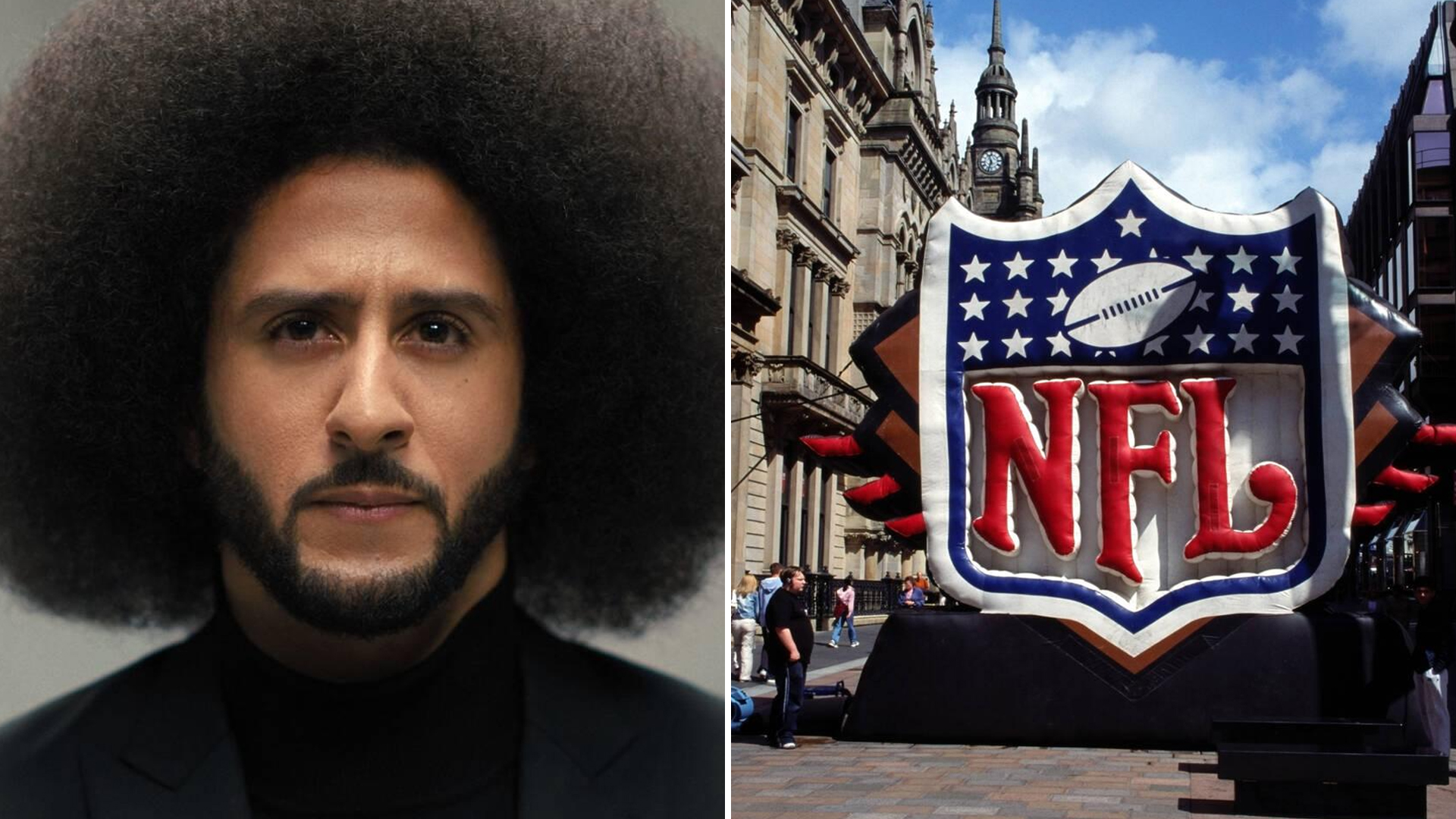
In a decision that shocked sports fans, political commentators, hot-take podcast hosts, and at least three people who accidentally wandered into the wrong press conference, NFL team owners reportedly voted Thursday to ban Colin Kaepernick from every stadium associated with professional football, citing what they described as “an ongoing surplus of wokeness.”
The vote allegedly took place during a secret meeting held inside a luxury skybox filled with leather chairs, gold-plated footballs, and a giant scoreboard dedicated entirely to tracking social media arguments. According to sources who may or may not have been three interns hiding behind a snack cart, owners spent nearly six hours debating whether Kaepernick’s influence had somehow continued affecting the league despite him not having played an NFL game in years.
“We’ve run the numbers repeatedly,” one anonymous owner reportedly said while pointing to a chart that appeared to be drawn entirely in crayons. “Every time someone posts a controversial opinion online, every time a sports commentator raises their voice on television, and every time someone argues on Facebook during Thanksgiving dinner, somehow Colin Kaepernick gets mentioned. At this point, we’re not even sure how he does it.”
The owner then unveiled a presentation titled The Kaepernick Effect: Why We Still Can’t Stop Talking About Something That Happened Years Ago. The presentation allegedly included pie charts, bar graphs, and a highly sophisticated flowchart that connected nearly every major cultural debate of the last decade to a single photograph of Kaepernick kneeling during the national anthem.
League officials reportedly spent several minutes studying the chart before admitting they had no idea what any of it meant.
The controversy began years ago when Kaepernick’s protests sparked national discussions about race, politics, and the role of athletes in public discourse. Since then, his name has frequently resurfaced whenever sports and politics intersect, creating what some owners described as “a never-ending loop of cable news content.”
“We thought people would stop arguing about it after a few weeks,” another anonymous executive reportedly explained. “Then we thought it would fade after a year. Then five years. Then ten years. At this point we’re considering hiring scientists.”
The league’s emergency scientific task force was quickly assembled and consisted primarily of former fantasy football champions and one retired meteorologist. After months of research, the group concluded that Kaepernick’s name now appears in public debates with approximately the same frequency as discussions about taxes, weather forecasts, and whether pineapple belongs on pizza.
The report was immediately classified.
Fans reacted to the news in dramatically different ways. Some called the decision ridiculous. Others called it overdue. Many admitted they had stopped following the original controversy years ago and were mostly surprised to discover it was apparently still being discussed.
Outside several stadiums, confused spectators gathered to ask practical questions.
“Does this mean he can’t buy a ticket?” asked one fan.
“No.”
“Can he watch a game on TV?”
“Yes.”
“Can he drive past the stadium?”
“We’re honestly not sure,” the official replied.
To enforce the alleged ban, owners reportedly proposed installing what they called “Woke Detection Systems” near stadium entrances. The devices were designed to identify political opinions, social activism, and excessive social media engagement.
The project quickly encountered technical difficulties.
During testing, the system accidentally flagged half of the league’s sponsors, several team owners, three mascots, and an inflatable blimp. Engineers later admitted the technology could not distinguish between political activism and someone simply posting motivational quotes online.
“It’s a work in progress,” one developer explained.
Meanwhile, sports analysts rushed to television studios to provide instant reactions. Within minutes, every major sports network had assembled panels consisting of former players, former coaches, former referees, former executives, and at least one person whose only qualification appeared to be owning a microphone.
The discussions continued for hours. One analyst argued the decision represented a historic turning point for professional sports.
Another argued it represented absolutely nothing. A third analyst spent fourteen uninterrupted minutes debating himself. Ratings reportedly soared. Not everyone within the NFL community supported the move. Several team executives privately questioned whether banning someone from every stadium would actually solve anything.
“What exactly are we trying to accomplish?” one executive reportedly asked during a closed-door meeting.
The room allegedly fell silent. After several moments, someone suggested ordering lunch. League owners then shifted focus toward other pressing concerns, including declining attention spans, endless social media outrage cycles, and the growing realization that nearly every public controversy now generates approximately seven thousand opinion videos within the first hour.
According to insiders, a follow-up proposal was introduced that would ban all controversial discussions from stadium property entirely. The measure was abandoned after officials realized it would eliminate roughly 90 percent of sports talk programming.
As news of the decision spread, political commentators across the ideological spectrum celebrated an unexpected victory: they had finally found a topic guaranteed to generate engagement from everyone.
Experts estimated that millions of comments, posts, reactions, arguments, debates, podcasts, livestreams, articles, and angry replies would be produced within the first twenty-four hours alone.
“This may be the most productive thing to happen to the outrage industry in years,” said one media analyst. “The economic impact could be enormous.”
At press time, NFL owners were reportedly considering additional measures to reduce controversy, including banning debates, banning opinions, banning comment sections, and temporarily banning the internet itself. Early projections suggested none of those plans would work.