
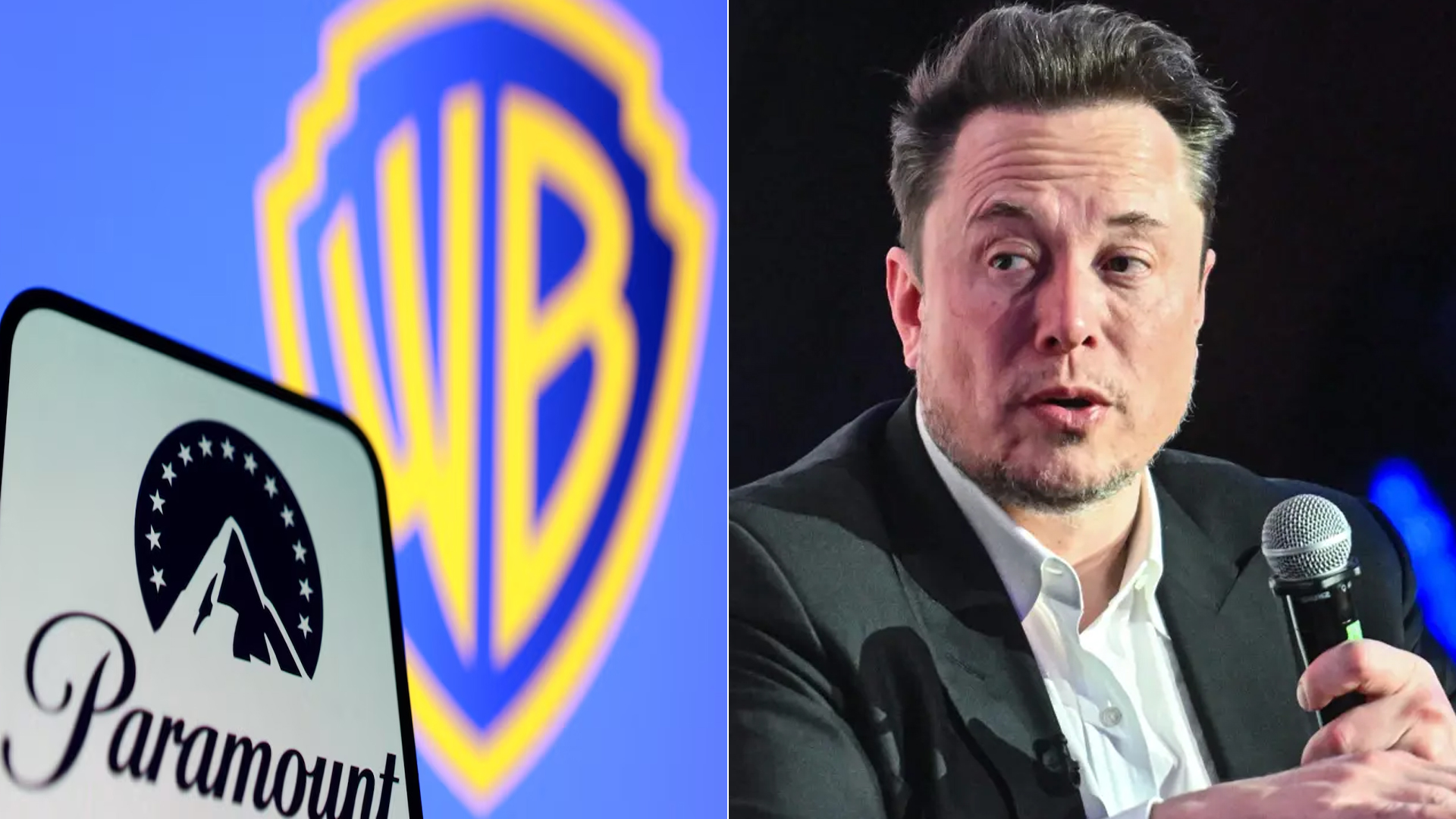
Elon Musk has reportedly made an extraordinary proposal involving Warner Bros. and Paramount, offering $50 billion to acquire the two entertainment giants and create what he describes as a completely different kind of Hollywood company.
The proposal comes as Paramount’s acquisition of Warner Bros. Discovery moves forward. Paramount and WBD agreed to a transaction valuing WBD at about $110 billion, with the combined company expected to become one of the largest entertainment businesses in the world.
In this satirical scenario, Musk says he isn’t interested in simply becoming another investor. Instead, his goal would be to take control of both companies and dramatically reshape their approach to filmmaking.
“My dream is to create a new, non-woke company out of these two and change Hollywood,” Musk said.
“I’ve offered them $50 billion to buy both companies, and if they agree, I’ll focus on making non-woke movies. The woke mind virus is everywhere,” he added.
The fictional proposal would put Musk directly into the entertainment business, giving him control over some of Hollywood’s most recognizable franchises and production operations.
Warner Bros. brings a vast collection of intellectual property to the table, including the Harry Potter franchise, DC Universe and other major film and television properties. Paramount, meanwhile, controls franchises including Mission: Impossible, Top Gun and SpongeBob SquarePants.
Musk’s supposed plan would therefore represent an enormous transformation of the entertainment industry.
Rather than focusing on technology, electric vehicles or space exploration, the billionaire would suddenly find himself overseeing movie studios, streaming platforms, television networks and some of Hollywood’s biggest franchises.
The proposed $50 billion figure would also represent a dramatic intervention into the ongoing corporate reshaping of Hollywood.
However, in reality, reporting has indicated something considerably different. Paramount has considered Musk as a potential participant in a group of equity investors as the company works through the financial demands of acquiring Warner Bros. Discovery. That is not the same as Musk offering $50 billion to purchase both companies.
The real transaction already carries a massive price tag. Paramount’s agreement values Warner Bros. Discovery at approximately $110 billion in enterprise value, while the company has committed to significant additional investment in U.S. film and television production.
Still, the idea of Musk personally taking over the two studios has obvious Hollywood implications.
Under the fictional plan, Musk says he would concentrate on movies that appeal to audiences who believe Hollywood has become too focused on political messaging.
His approach would represent a sharp departure from the traditional studio model, where executives, producers, directors and creative teams collectively determine which projects receive major budgets.
The hypothetical takeover would also create plenty of questions about what would happen to existing franchises, executives and production teams.
Would Musk completely restructure the studios? Would he bring in new filmmakers? Would he prioritize action, science fiction and comedy? And how would audiences respond to a Hollywood operation openly built around his personal cultural views?
Those questions remain hypothetical.
For now, Paramount’s actual path is centered on completing its Warner Bros. Discovery transaction and integrating the two businesses. The company has also committed to releasing at least 30 theatrical films annually during the first two years following the merger.
But in this fictional version of events, Musk isn’t waiting around for Hollywood to change on its own.
He’s putting his money where his mouth is—and attempting to buy the entire operation.