
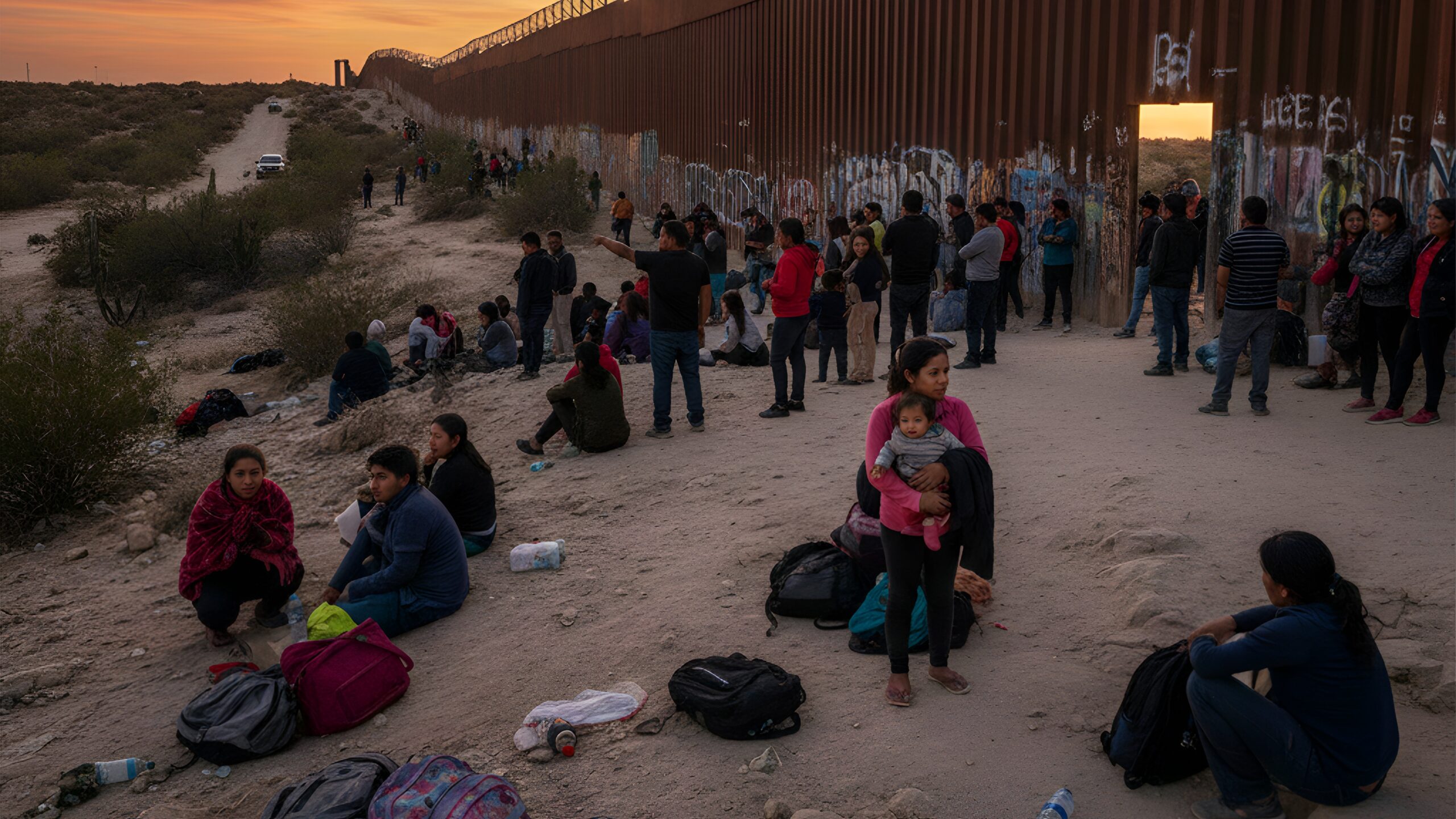
The new report showing that the United States has lost more immigrants than it gained in 2025 marks one of the most significant demographic shifts the country has experienced in half a century. For decades, the immigrant population had been a reliable source of growth—economically, socially, and culturally.
Yet in just the first six months of 2025, that long-standing trend reversed, resulting in a net decline of roughly 1.4 million immigrants. Analysts point out that this is the first time since the 1960s that the foreign-born population has shrunk rather than expanded, a development that reflects a combination of policy changes, increased enforcement, and shifting migration patterns.
In January 2025, the U.S. foreign-born population reached a historic high of about 53.3 million. By June, that number had fallen to 51.9 million. This 2.6% decline may appear modest on paper, but its implications are immense.
After decades of steady growth, even a short-term dip would be noteworthy. But such a sharp drop in such a short period signals a deeper structural shift. Researchers attribute the trend primarily to departures—many voluntary, some likely due to deportation—outpacing new arrivals under a tighter immigration environment.
The decline comes at a time when immigration policy has undergone rapid and sweeping change. New enforcement efforts, expanded expedited removals, stricter asylum rules, and reduced pathways for temporary and permanent migration have altered the landscape dramatically.
When combined with an atmosphere of uncertainty, these policies have reportedly pushed many immigrants—especially those without permanent legal status—to reassess their place in the country. While some have left due to fear of enforcement, others have chosen to return to their home countries or seek opportunities elsewhere, believing the U.S. no longer offers the stability or pathways it once did.
Another consequence of the decline is the shrinking presence of immigrant workers in the labor force. Immigrants have long played a crucial role in key sectors such as agriculture, construction, healthcare, hospitality, and manufacturing.
Their contributions have been especially important given the aging U.S. population and persistently low birth rates. In early 2025, immigrants made up about one in five workers nationwide. By mid-year, that share fell to around 19%, representing a loss of more than 750,000 immigrant workers. Economists warn that such a drop could worsen existing labor shortages, slow business growth, and contribute to higher prices for services and goods.
Demographically, the downturn in immigration raises questions about the nation’s long-term population stability. For years, immigration has been the primary driver of U.S. population growth, offsetting steadily declining birth rates.
Without strong immigration inflows, the country risks stagnation or even population decline—something the Congressional Budget Office has warned about for years. A shrinking or aging workforce could place increased strain on social programs, reduce economic dynamism, and weaken the country’s global competitiveness.
Behind the numbers, however, lies an important layer of uncertainty. Surveys that measure the immigrant population rely on voluntary participation, and researchers acknowledge the possibility that some of the apparent decline stems from decreased survey response rates among immigrants, particularly those in vulnerable positions.
Fear of interacting with government-affiliated data collectors can suppress responses, potentially making the decline appear larger than it truly is. Still, experts agree that even if undercounting plays a role, the scale of the drop is too large to dismiss as a statistical fluctuation.
The social and political impacts of this demographic shift are also unfolding. Communities that have grown around immigrant populations may experience cultural and economic changes as residents leave. Small businesses owned or staffed by immigrants could face staffing challenges or declines in customer bases.
States and cities that rely heavily on immigrant labor—particularly those in agriculture, hospitality, or elder care—may encounter shortages that disrupt local economies. At the same time, the decline is likely to reshape national debates around immigration, enforcement, and workforce needs. Some will argue that stricter policies are necessary for national security or economic protection, while others will stress the dangers of diminishing the country’s most reliable source of demographic growth.
Globally, the U.S. decline in immigrant numbers may influence migration flows elsewhere. Countries in Europe, Canada, and parts of Asia—already competing for skilled and unskilled labor—could see increased interest from people who might previously have chosen the United States.
Some migrants may also return home with new skills, capital, or global experience, altering local economies abroad. The ripple effects of U.S. immigration shifts tend not to be contained within American borders.
Looking ahead, it is unclear whether the 2025 decline represents a temporary dip or the beginning of a long-term trend. The forces shaping migration—policy, economics, global conflict, climate pressure, and labor demand—are constantly evolving.
If current enforcement levels remain in place and legal pathways continue narrowing, analysts expect immigration numbers to remain flat or decline further. If policies shift again, the United States could see a rebound in arrivals. For now, however, the data is clear: more immigrants are leaving the country than coming in, ending a 50-year pattern of growth.
This moment marks a profound turning point. The United States has long been defined by its ability to attract newcomers seeking opportunity, safety, and a better life. The net loss of immigrants in 2025 challenges that identity and raises difficult questions about the direction of the country. Whether this trend continues or reverses, its impact will resonate for years to come—economically, socially, and demographically—both in the United States and around the world.