
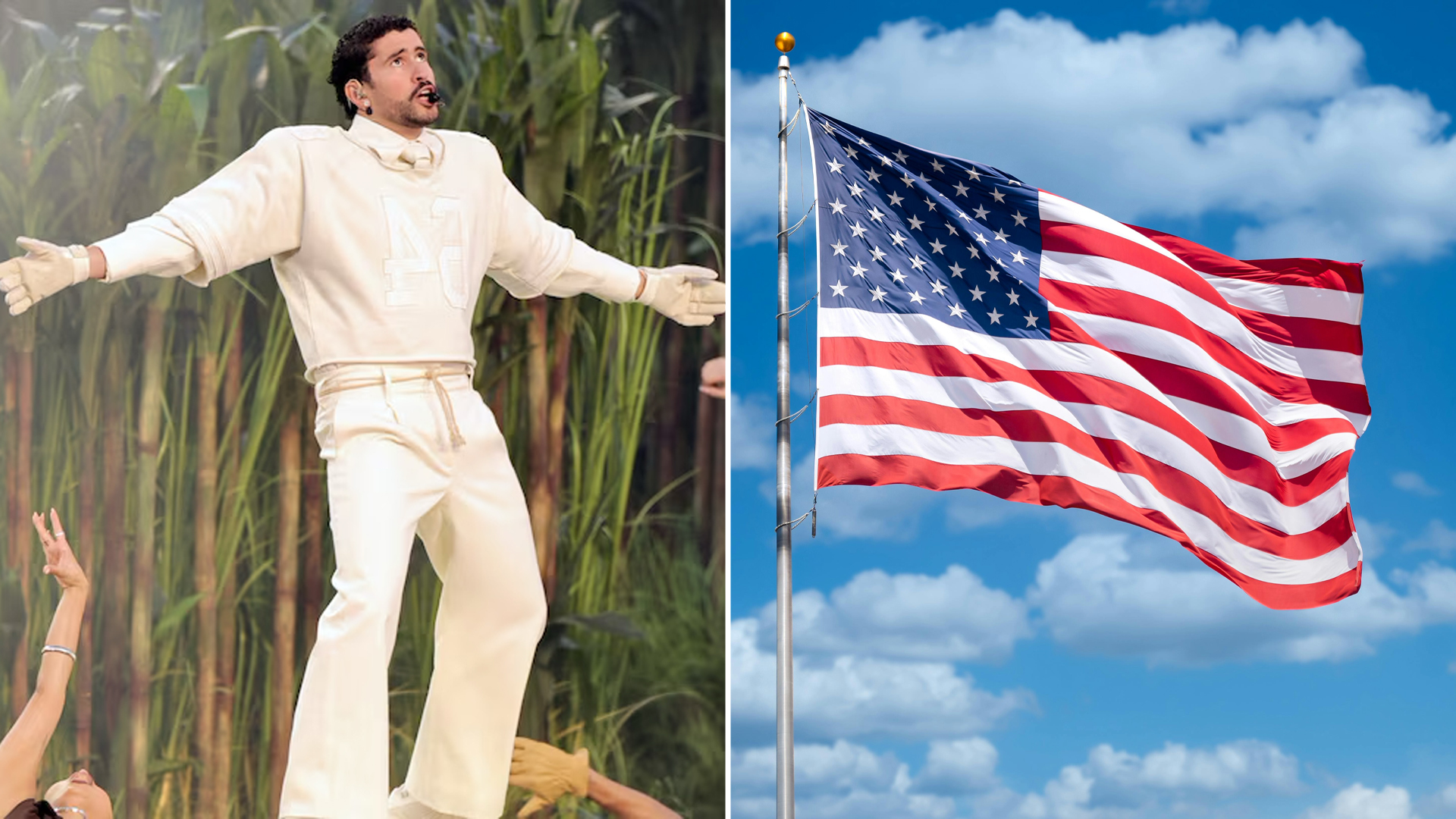
In the high-stakes world of live broadcasting, the fallout from Super Bowl 60 has moved from the football field to the halls of the federal government. As if the ratings war between the NFL and Turning Point USA’s “All-American Halftime Show” wasn’t enough, a new battlefront has opened: a formal inquiry by the Federal Communications Commission (FCC) into the official halftime performance by Puerto Rican superstar Bad Bunny.
The investigation, reportedly sparked by a wave of public complaints and high-level political pressure, focuses on a singular, polarizing theme: that a performance delivered almost entirely in Spanish “does not represent America.”
When the NFL and Jay-Z’s Roc Nation tapped Bad Bunny for the 2026 halftime show, they knew they were making a play for global dominance. Bad Bunny is a streaming titan, a fashion icon, and a voice for the massive, growing Latino population. But in a post-2024 political climate, the decision was seen by many as a deliberate provocation.
As Benito Antonio Martínez Ocasio took the stage in Santa Clara, he didn’t hold back. The set was a vibrant, unapologetic tribute to Caribbean culture, featuring domino games, Puerto Rican light poles, and a setlist performed entirely in his native tongue.
To his fans, it was a landmark moment of inclusion. To his critics, it was the final straw in the “Latinization” of American institutions.
The FCC’s sudden interest isn’t happening in a vacuum. Earlier this week, U.S. Congressman Andy Ogles (R-TN) sent a blistering letter to the Committee on Energy and Commerce, which oversees the FCC. While his primary public complaints centered on the “explicit nature” of the choreography—specifically citing “widespread twerking” and “suggestive content”—the subtext of the investigation revolves around the language barrier.
Ogles and his supporters argue that for a “uniquely national event” funded by American consumers and aired on public airwaves, the performance should reflect the primary language of the country.
“We must ensure that we hold Spanish-language content to the same standards and expectations we have for English-language content,” Ogles stated. “The fact that the lyrics were in Spanish did not mitigate the explicit nature of the material; if anything, it obscured it from parents trying to monitor what their children were hearing.”
The FCC investigation is reportedly looking into whether the NFL and NBCUniversal “deliberately disregarded” broadcast standards by airing a show that many viewers felt was “culturally alien.”
The heart of the “It doesn’t represent America” argument rests on a specific interpretation of national identity. For a segment of the audience—many of whom opted to watch Kid Rock’s “All-American” alternative instead—the Super Bowl halftime show is supposed to be a unifying moment of American patriotism. To them, 13 minutes of Spanish-language trap music felt less like a celebration of diversity and more like a displacement of traditional American values.
Legally, the FCC is in a difficult position. The agency has strict rules regarding indecency and profanity, but it has no mandate requiring performers to speak or sing in English.
However, the investigation is focusing on a broader “public interest” requirement. Broadcasters receive licenses to use public airwaves on the condition that they serve the “interest, convenience, and necessity” of the public. The inquiry will likely examine:
-
Translation Oversight: Did the FCC and NBC have accurate, real-time translations of the lyrics to ensure no “profane” Spanish terms were aired?
-
Community Standards: Does a Spanish-only show during the most-watched American broadcast of the year violate the “contemporary community standards” of the national audience?
Unsurprisingly, the investigation has ignited a firestorm from civil rights groups and the Latino community. They point out a fundamental fact that seems lost in the political theater: Puerto Ricans are American citizens.
“To say that Bad Bunny doesn’t represent America is to say that millions of American citizens in Puerto Rico and across the mainland don’t count,” said one advocate. “He ended his set by saying ‘God Bless America’ and listing every country in the hemisphere. That is a vision of America that is inclusive, not exclusive.”
Even the NFL has remained steadfast. Commissioner Roger Goodell defended the choice before the game, noting that the league’s goal is “global reach.” From the NFL’s perspective, the 1.5 billion people who engaged with the various halftime shows (both official and alternative) prove that the audience is larger and more fragmented than a single language can capture.
The FCC investigation is inextricably linked to the success of the TPUSA “All-American” show. By drawing a massive audience to a show that featured Kid Rock and Brantley Gilbert, the conservative movement proved that there is a “market” for a specific kind of American imagery.
The investigation is, in many ways, an attempt to codify that cultural preference into law. If the FCC determines that the NFL failed in its “public interest” duty, it could lead to massive fines or, more likely, a chilling effect on future halftime selections.
As we look toward Super Bowl 61, the NFL finds itself in a vice. On one side, they have the global, digital-native audience that propelled Bad Bunny to the top of the charts. On the other, they have a federal government and a significant domestic base that is demanding a return to “traditional” programming.
The FCC investigation may not end in a revoked license, but it has already succeeded in doing one thing: it has turned the halftime show into the most contested territory in the American culture war.
The question is no longer just “Who is playing?” but “Who are they playing for?” And as the 1.5 billion views and the FCC inquiry suggest, the answer depends entirely on which version of America you’re tuned into.