
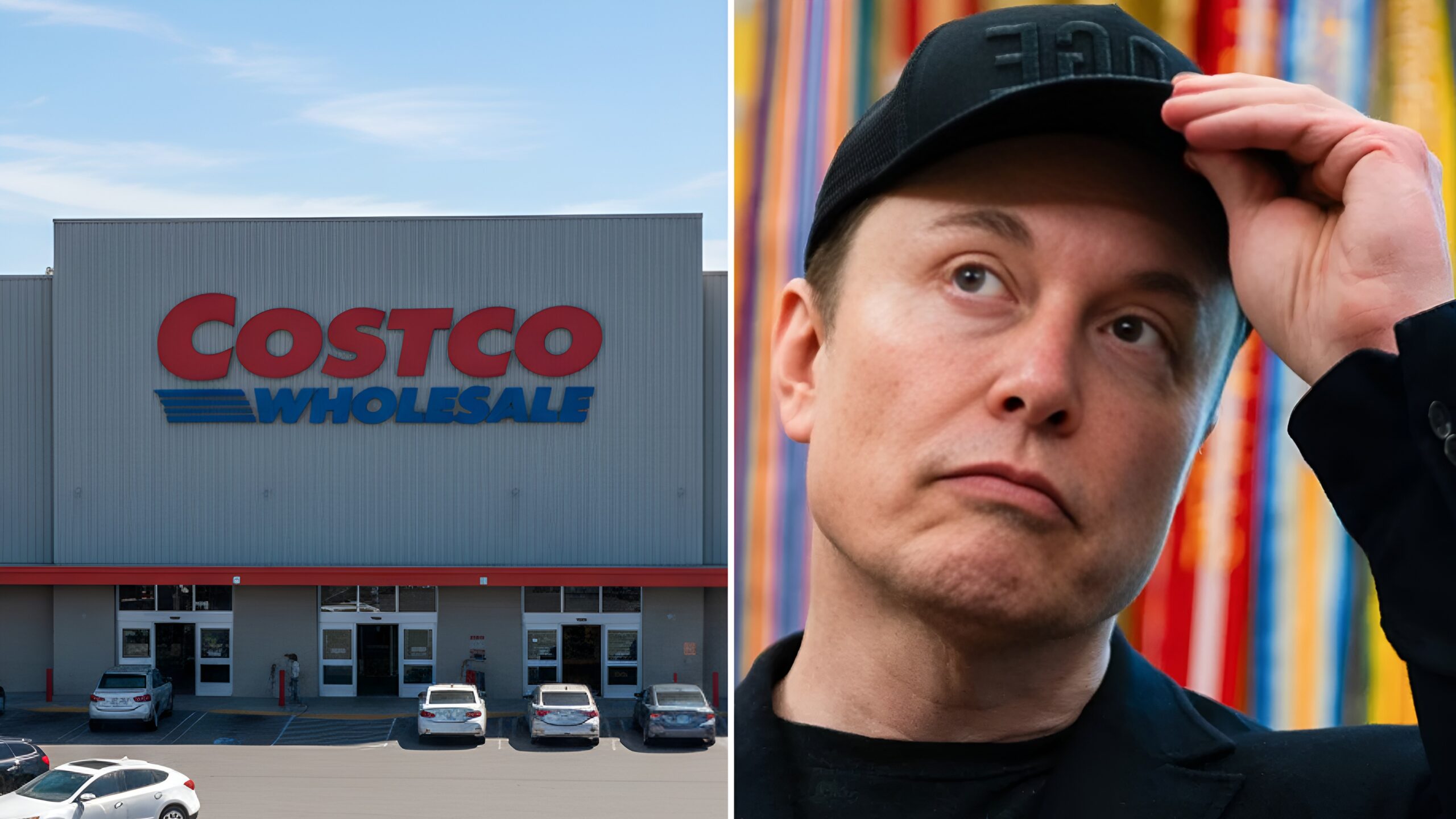
The world of bulk retail was plunged into chaos yesterday after Elon Musk, Chief Everything Officer of the Internet and now apparently, the Grand Arbiter of U.S. Trade Policy, launched a scorched-earth campaign against Costco. The catalyst? The wholesale giant’s entirely reasonable, yet apparently treasonous, decision to sue the Trump administration for a refund on tariffs they believe were illegally imposed.
In what is being called the “Great Kirkland Reckoning,” Musk took to his platform, X (formerly Twitter), to deliver a series of highly charged, yet grammatically suspect, pronouncements.
“Costco is anti-American,” he began, shortly after concluding a deeply philosophical, 3:00 AM debate with a spam bot about the superiority of multi-planet species. “They want their $Billions$ back. Why? Because they don’t believe in the great American hot dog. Tariffs protect the hot dog. If SCOTUS rules against the tariffs, our entire civilization collapses into a vortex of cheap Chinese plastic tubs. We must fight! #BoycottCostco #TariffTruth #HotDogSovereignty.”
The effect of the tweet was immediate, and, if you believe the sources currently being quoted by various breathless cable news anchors, utterly devastating. A completely unverified report from an analyst at “HyperLoop Research & Deli” claimed that Costco lost “approximately 100,000 members overnight,” which, the analyst admitted, was “a number we just pulled out of a hat, but it sounds suitably catastrophic for a Thursday.”
The alleged exodus—a supposed torrent of irate, bulk-buying patriots—was apparently composed entirely of people who fundamentally misunderstood the technical, deadline-driven nature of Costco’s lawsuit.
“Sir, the lawsuit isn’t about being against the President, it’s about making sure we’re legally eligible for a refund if the Supreme Court ultimately rules the tariffs were illegal,” explained one overwhelmed Costco employee, “Brenda,” to a camera crew from an independent online news organization called Truth Bomb Central.2 “It’s a legal formality to preserve our rights before the Customs and Border Protection ‘liquidates’ the payments.3 It’s literally just paperwork—”
Brenda was cut off mid-sentence by a furious man attempting to return a six-pound jar of pre-sliced pickled jalapeños.
“Paperwork? PAPERWORK?!” the man bellowed, his face turning the same shade of crimson as the aforementioned jalapeños. “You think this is about paperwork, lady? This is about principles! I buy my bulk paper towels here because I believe in the American Dream, not some refund-seeking corporate conspiracy! I’m cancelling my membership! I’m going to Sam’s Club, where I assume they understand the geopolitical importance of a 72-pack of AA batteries!”
The man then dramatically shredded his membership card and tossed the pieces onto a mountainous display of discounted trail mix, only to sheepishly ask Brenda moments later if he could have a new card because his wife was “really mad” about the cancellation.
The debacle quickly spiraled into a bizarre culture war where the simple act of shopping became a political litmus test.
Musk’s followers, who had apparently never read a legal brief in their lives, instantly mobilized. They rebranded Costco as “Costcommie” and lamented the “betrayal of the free-market hot dog.”
“The tariffs were necessary to protect the hard-working American who makes… uh… whatever is in the middle of a Kirkland brand sofa,” tweeted one popular account with a blue checkmark and a profile picture of a dog wearing a tiny space helmet. “Costco just wants cheaper foreign-made goods! This is an insult to the $1.50 hot dog and soda combo! How can they afford that price if they’re not paying the tariff tax?! Think, people, THINK!” (The economics, as always, remained elusive).
In the White House, the response was a mixture of outrage and opportunistic glee. A senior economic advisor, speaking off the record while frantically searching for his own Costco card, dismissed the lawsuit as a “deep state attempt to deny the American people their tariff dividends” (referring to the promised, but yet-to-be-seen, checks for tariff revenue).
Meanwhile, Costco’s stock price fluttered with the mild instability of a moth near a lightbulb, dipping briefly before quickly recovering, suggesting that institutional investors were perhaps less concerned with Musk’s late-night tweets than with the retailer’s consistently solid revenue stream.
At a press conference held outside a suburban Costco food court, a trade lawyer named Dr. Penelope Quark, who specializes in the legal complexities of bulk commerce, attempted to provide clarity.
“I cannot stress this enough,” Dr. Quark stated, adjusting her spectacles against the blinding sun reflecting off a pallet of bottled water. “Costco’s legal action is a defensive maneuver. If the Supreme Court invalidates the tariffs, Customs will have already finalized, or ‘liquidated,’ the payments, potentially eliminating Costco’s ability to recover billions of dollars.4 They are simply making sure they are in line for a refund.5 It is not an attack on the President or the American hot dog. The hot dog is safe.”
Her words were immediately drowned out by a passing truck attempting to deliver a new shipment of 96 rolls of toilet paper, symbolizing the triumph of practical commerce over digital noise.
Elon Musk, seeing the minimal financial impact of his boycott, pivoted instantly. He announced a new, competitor wholesale chain: X-Mart.
“X-Mart will be the truly free-speech, patriotic, space-grade bulk retailer this nation deserves,” he proclaimed. “No tariffs, only anti-tariffs. Everything will be sourced directly from the Moon and certified by an AI named ‘Giga-Brenda.’ Membership fee: One original Bitcoin, or one-million Dogecoin, or simply a convincing tweet demonstrating loyalty to the cause. Our signature item will be a revolutionary, anti-gravity hot dog, priced at $1.51, because we believe in adding value.”
The internet, having temporarily forgotten its outrage over the tariff lawsuit, immediately turned its attention to debating whether the ‘Giga-Brenda’ AI would be better at finding samples than the original Brenda from Membership Services.
As the sun set, a single light remained on at the local Costco, illuminating a sign that simply read: “Membership remains $60. Hot dogs are still $1.50. We encourage you to seek judicial clarity.”
The Great Kirkland Reckoning had come and gone, leaving behind only 100,000 newly confused Sam’s Club shoppers and one very tired employee named Brenda. The tariffs, like the endless pallets of paper goods, remained firmly in place, awaiting the only judgment that truly mattered: that of the Supreme Court.